 屬靈共同書目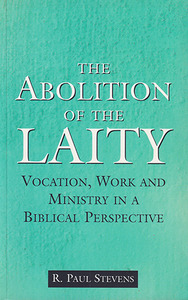
內容簡介
A practical theology for living seven days a week for the glory of God
Throughout almost all of its history the church has been composedof two types of people, those who 'do' ministry and those to whom it is 'done'. Exploring the theological, structural and culturalreasons for treating lay-people as the objects of ministry, Paul Stevens challenges the idea that a select few are called minister to others. He argues that the clergy-laity division finds no basis in the New Testament. Just as God is a trinity, yet one, so the people of God, though diverse, and with various functions, are one. This has serious implications for our understanding of ministry and Paul Stevens challenges Christians to rediscover what it means to be the people of God living to God's glory in everyday life.
Arguing from Scripture, Paul Stevens shows that 'calling' is first and foremost to Someone before it is to do something. It is a call to salvation, a call to holiness and a call to service, issued to God's people as a whole and to each member of the community. It is not a means of identifying leaders and giving them credibility. All believers are called to participate in God's mission as witnesses of his saving grace. This mission is directed to the whole of society, to the structures of common life at work and in the home. Churches should recognise, support and equip people for ministry in work-places, neighbourhoods and other spheres of influence.
Such a perspective demands the revision of existing attitudes and practices in many churches and theological institutions. For too long peoples' everyday lives have been separated from the communal life of the church. Theology must be given back to the whole people of God. Theory and practice must be united in a way that transcends clericalism, encompass earthly realities and expounds the menial, the trivial and the necessary. In other words, 'a theology of the people, for the people and by the people'.
延伸連結
版本資訊
- R. Paul Stevens・1999-01-01・289 頁ISBN10 0853649820、ISBN13 9780853649823、STORE 9780853649823print HKD 280