 屬靈共同書目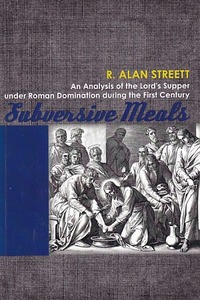
內容簡介
Eating the Lord's Supper was an act of political resistance...
Subversive Meals examines the Lord's Supper within the socio-political context of first-century CE Roman domination, and concludes that it was an anti-imperial praxis. Although the Christian communal meal looked much like a typical Roman banquet in structure with a deipnon and a symposion, it was essentially different. The Roman meal supported the empire's ideology, honored Caesar and the gods, reinforced stratification among the masses, and upheld Rome's right to rule the world. The Christian meal, on the other hand, included hymns that extolled Jesus as Lord, prophecies that challenged Rome's ideological claims, and letters--read aloud--that promoted egalitarianism and instructed believers how to live according to kingdom of God principles. Hence, the Christian banquet was an act of non-violent resistance, or what James C. Scott calls a "hidden transcript."
The nascent Jesus movement looked to: 1) the Passover, a covenant meal of political liberation; 2) Jesus' counter-imperial mealtime teachings; and 3) his kingdom-oriented interpretation of the Last Supper as bases for its own meal practices.
延伸連結
版本資訊
- Pickwick Publications・2013-06-01・340 頁ISBN13 9781620320181、STORE 9781620320181print HKD 316