 屬靈共同書目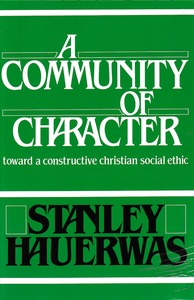
內容簡介
Here leading theological ethicist Stanley Hauerwas applies his theory of the narrative formation of Christian character to the field of social ethics by showing why any consideration of the truth of Christian convictions cannot be divorced from the kind of community the church is and should be.
The author shows how discussions of christology and the authority of scripture involve questions about what kind of community the church must be to rightly tell the stories of God. He challenges the dominant assumption of contemporary Christian social ethics that there is a special relation between Christianity and some form of liberal democratic social system.
Hauerwas then argues that the neglect of the virtues in modern ethics is a correlative of the liberal attempt to avoid facing the historical nature of our existence. In particular he criticizes the liberal inspired theories of moral development whose stress on autonomy distorts the narrative character of the moral life.
The family is a crucial focus for Christian social ethics because the type of family created by the church is one of the most telling marks of the church's social significance. We must encourage the virtues of patience and hope if we are to sustain the Christian understanding of the significance of having and rearing children.Hauerwas demonstrates how an appreciation of the political nature of an ethics of sex and abortion is necessary if we are to understand the distinctive light Christian convictions provide about these matters.
Stanley Hauerwas's previous books are Truthfulness and Tragedy, Vision and Virtue, and Character and the Christian Life.
延伸連結
版本資訊
- University Of Notre Dame Press・1981-01-01・308 頁ISBN13 9780268007355、STORE 0268007357print HKD 280