 屬靈共同書目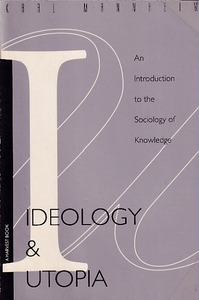
內容簡介
Karl Mannheim was a Hungarian-born sociologist, influential in the first half of the 20th century and one of the founding fathers of classical sociology as well as a founder of the sociology of knowledge. His essays on the sociology of knowledge have become classics in the field. In "Ideology and Utopia" he argued that the application of the term ideology ought to be broadened. He traced the history of the term from what he called a "particular" view. This view originally saw ideology as the perhaps deliberate obscuring of facts. Over time this view gave way to a "total" conception (most notably in Marx), which argued that a whole social group's thought was formed by its social position (e.g. the proletariat's beliefs were conditioned by their relationship to the means of production). However, he called for a further step, which he called a general total conception of ideology, in which it was recognized that everyone's beliefs-including the social scientist's-were a product of the context they were created in. Mannheim points out social class, location and generation as the greatest determinants of knowledge. He feared this could lead to relativism but proposed the idea of relationism as an antidote. To uphold the distinction, he maintained that the recognition of different perspectives according to differences in time and social location appears arbitrary only to an abstract and disembodied theory of knowledge.
延伸連結
版本資訊
- Harcourt Brace・1985-01-01・354 頁ISBN13 9780156439558、STORE 9780156439558print HKD 136