 屬靈共同書目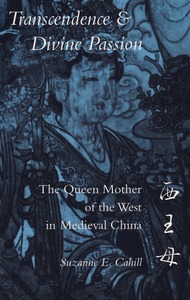
內容簡介
From the Backcover:
This book examines the greatest Taoist goddess of the T'ang dynasty (618-907), the Queen Mother of the West, Hsi Wang Mu, through the eyes of medieval Chinese people. What kind of goddess was she, and how does she compare with other deities in China and else- where? What does her worship tell us about religion and the state, about religion and the lives of men and women, courtiers and peasants in T'ang China? What was her literary influence during the T'ang, the golden age of Chinese poetry?
"A welcome study in East Asian religions. Using the works of T'ang poets and the early tenth century hagio- graphical account of the Taoist master Tu Kuang-t'ing, it examines the Queen Mother of the West, the greatest Taoist goddess of the T'ang dynasty. Through her histor- ical development from the Bronze Age to the T'ang period, the Queen Mother emerges in terms of two par- ticular attributes: transcendence (the overcoming of human limitations, such as mortality) and divine passion (her relations with humans, which provides them a means to attain transcendence). Through its inscrip- tions, historical references, poetic excerpts, and pictorial arts, this book provides a penetrating insight into the religion and culture of the T'ang people." -Choice
"A fascinating book that reveals the extremes of the T'ang literati's search for truth." -Pacific Affairs
延伸連結
版本資訊
- Stanford University Press・1993-01-01・303 頁ISBN10 0804725845、ISBN13 9780804725842、STORE 9780804725842print HKD 320