 屬靈共同書目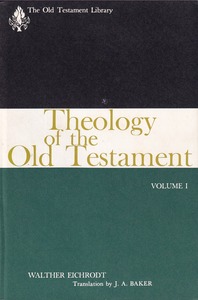
內容簡介
This book is the first volume of the monumental work that has come to be regarded as a theological classic, a landmark in Old Testament studies. Since it was first published in 1933, other books have been written on the subject, but this one remains the standard by which the others are compared. The present translation contains Dr. Eichrodt's revisions to the end of 1960.His appproach, asstated at the outset, is two-fold. On the one hand, he studies the religion of the Old Testament in relation to the many and varied religions that coexisted with it in the Near Eastern world. He finds that, although from time to time through ever-changing historical conditions Israel was influenced by these other religions, her own faith remained a self-contained entity, exhibiting a constant basic tendency and character. At the same time, Dr. Eichrodt sees the Old Testament in its relation to the New, and that relationship is not, he emphasizes, in one direction only and preparative, but reciprocal. The New Testament message points forward to the future, but it is inseparably bound up with the Old Testament past. The Old Testament is, thus, not ancillary but essential to the New.Unlike some writers on Old Testament theology, Dr. Eichrodt feels no compulsion to preface his study with a historical sketch. Neither does he adopt the categories of dogmatic theology as his framework. Rather, he arranges his material according to a pattern drawn from the dialectic of the Old Testament itself wherein is proclaimed a God who is, to be sure, the national God of Israel but is also the God of the whole world and of all the individual men and women in it.This trilateral yet unitive theme he sees developing primarily in terms of the conception of teh Convenant, of which the "instruments" are the Spirit-filled leaders--the seers, judges, and prophets, and the official leaders -- the priests and kings who were complementary rather than antagonistic elements in Israel's faith. Moreover, he sees this theme developing continually but not continuously, checked and immobilized at times but always bursting forth again until the goal in Christ is reached and God's great purpose is revealed, the building of his Kingdom.
延伸連結
版本資訊
- Walther Eichrodt・1961-01-01・542 頁ISBN10 0664203523、ISBN13 9780664203528、STORE 0664203523print HKD 600