 屬靈共同書目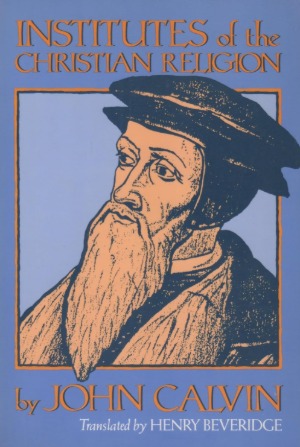
內容簡介
A colossal milestone of Christian thought―at an irresistible price!
From the Back Cover: Theologian par excellence of the Reformation, John Calvin is best known for his Institutes of the Christian Religion, written as a theological intro-duction to the Bible and a vindication of Refor-mation principles. After appearing in several editions beginning in 1536, Calvin's Institutes was finally published in this authoritative 1559 edition. Henry Beveridge's translation of Calvin's magnum opus is here available for the first time in one-volume paperback format.
Here in a convenient one-volume edition is John Calvin’s magnum opus. Written as an introduction to the Christian life, the Institutes remains the best articulation of Reformation principles and is a marvelous introduction to biblical Christianity. Newly retypeset for clarity, this volume translated by Henry Beveridge offers a more affordable edition of one of the last millennium’s must-have works. This book will appeal to libraries, seminarians, pastors, and laypeople.
Institutes of the Christian Religion by John Calvin is an introduction to the Bible and a vindication of Reformation principles by one of the Reformation’s finest scholars. At the age of twenty-six, Calvin published several revisions of his Institutes of the Christian Religion, a seminal work in Christian theology that altered the course of Western history and that is still read by theological students today. It was published in Latin in 1536 and in his native French in 1541, with the definitive editions appearing in 1559 (Latin) and in 1560 (French). The book was written as an introductory textbook on the Protestant faith for those with some learning already and covered a broad range of theological topics from the doctrines of church and sacraments to justification by faith alone. It vigorously attacked the teachings of those Calvin considered unorthodox, particularly Roman Catholicism, to which Calvin says he had been “strongly devoted” before his conversion to Protestantism. The overarching theme of the book―and Calvin’s greatest theological legacy―is the idea of God’s total sovereignty, particularly in salvation and election.
延伸連結
版本資訊
- 1989-01-01・704 頁ISBN10 0802881661、ISBN13 9780802881663、STORE 9780802881663print HKD 380